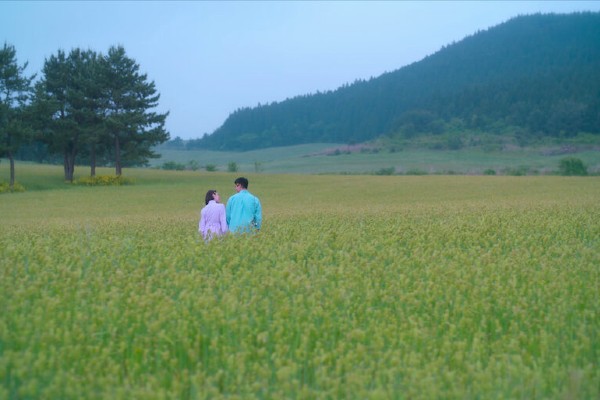
Plot? Perfect. Cast? Flawless.
When Life Gives You Tangerines (WLGYT)—divided into four “volumes,” each representing a season of life (spring, summer, autumn, and winter)—is easily one of the most captivating, and equally touchy-feely (you’ve been warned!) series I’ve seen to date. Although it’s been a while since I finished watching it, I still find myself thinking about it often.
This 2025 South Korean romance and slice-of-life drama follows Ae-sun, a resource-constrained girl born in Jeju in 1950 who dreams of becoming a poet, and Gwan-sik, a steadfast young man from the same island who quietly, deeply loves her. Their story is narrated by their daughter, Yang Geum-yeong, and unfolds across six decades—rooted in the strength of their companionship.
The series title offers a soft twist on the familiar phrase “when life gives you lemons.” In this case, tangerines—a fruit native to Jeju—symbolize the sweetness, bitterness, and unexpected beauty of life’s offerings. While WLGYT is, at its core, a love story, it also reflects many facets of the human experience.
There’s the mother who risks her life to support her family, while her eldest child longs for her presence. The brilliant student from a modest background who must navigate nepotism and class bias. The woman who defies gendered expectations to lead with grit and grace. The firstborn daughter who bears the weight of being a first-generation college student. The parents who, despite financial hardship, figuratively move mountains for their children—even long into adulthood.
The series even squeezes in an unexpectedly ironic subplot: two longtime nemeses whose children fall in love, forcing them into an initially uneasy alliance as in-laws. Layered between all of this is the heartbreak of unequal love, the slow but determined pursuit of long-stalled dreams, and the boldness it takes to break generational cycles.
Though I’ve only watched a handful of K-dramas so far, WLGYT is top two—and not two. I’ll admit: the long episode runtimes (often over an hour) took some getting used to. But with this series, the extended format felt fully justified.
If you’re new to K-dramas or unsure what to watch next, I also highly recommend Extraordinary Attorney Woo and The King’s Affection—the latter was my introduction to the genre.